Shaping the Urbanism of Victorian America


I’m happy to report that The American Conservative, in its New Urbs featurehas published my article about the key factors that shaped Late Victorian urbanism in the United States. My piece focuses on this period before zoning, and explores the physical, legal, economic, and cultural phenomena that drove neighborhood development in the absence of comprehensive plans. I chose this period because it has intrigued me for a long time; and because so much of the New Urbanism of today seems to be imitating the forms of that era without necessarily asking the important questions about the larger context that created them. TAC deserves credit for taking a lead in discussing the important dynamic between urban form, society, and sustainable communities. Here’s a nice piece by executive editor Lewis McCrary about the walkability of New Jersey shore towns, many of which I have walked through, and many of which have an urban fabric that dates from the same period that my article describes.

Spotlight: The 1913 Woolworth Building

Woolworth Building
Click on the above photo to see my full album!

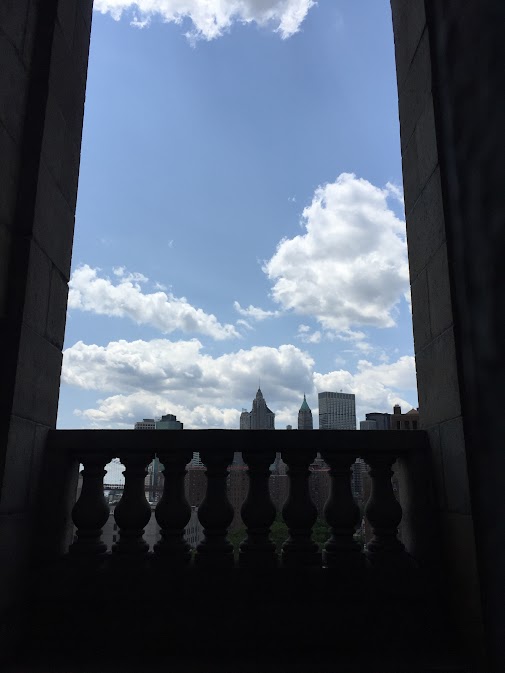
My office is just across Park Place from the landmark Woolworth Building. Once the world’s tallest skyscraper, the whimsically Gothic tower still dominates the western edge of New York’s town green. Back in the fall, I took a guided tour of the lobby — which is otherwise off limits — which turned out to be a pretty incredible experience. Here are some pictures.

Would definitely recommend to anyone with an interest in the building itself, early skyscrapers, tesellation and mosaics, the transition from classical to modern architecture, or just the history of American business. The colors are incredible. Likewise, the masonry and marble. Photos in my album begin in the main lobby, then move to the back of the main floor, down into the basement (where a lost entrance to the subway can be found, sealed off), and finally up to the balconies, where you can almost touch the tiled ceilings.

Spotlight: 2013 Mount Laurel Exhibit at Rutgers

mtlaurel
Click on the above photo to see the full album.

Here are some pictures I took of a special exhibit at the Rutgers Law Library in 2013, focused on the Mount Laurel doctrine, its history, and its legacy. I just discovered them while I was going through old photos, and thought they might be of interest to some readers. Incidentally, I was in John Payne’s Con Law class during his last semester of teaching at Rutgers. His untimely death was jarring for those of us who were in his class. Interesting fact: he and his wife lived in a Frank Lloyd Wright house, in Glen Ridge.

Spotlight: South Walkway, Manhattan Bridge


Click on the above photo to see the full album.

Was up on the walkway of the Manhattan Bridge. The view is really incredible, especially of the rooftops of Chinatown, and the lower stretch of the East River. The walkway sways a little bit in the wind, and — there are subway tracks right beside it — it really shakes when a subway goes by. It’s much less touristy than the Brooklyn Bridge, and still reminds me a little bit of how the city was in the 80s and early 90s: lots of graffiti, neglected infrastructure, homeless people. I saw three street people getting high, and another lying flat on the walkway.

Spotlight: George Inness in Montclair

George Inness

Click on the above photo to see my full album.

Just some pictures from a recent visit to the Montclair Art Museum, which has a nice collection of George Inness paintings and personal effects. Inness was one of the best artists of 19th century America, specifically, the Northeast. A native of the Hudson Valley, he was sometimes associated with the Hudson River School, but he maintained a distinct approach that defies classification. His palette reminds me a little bit of Van Gogh’s, but his subject matter is much more realist. He spent a bunch of time in Montclair, taking the countryside around Newark as inspiration for a number of his paintings.

Spotlight: The Federal Reserve Bank of New York

Federal Reserve Bank of New York
Click on the above photo to see my full album!

The Federal Reserve Bank of New York is a truly incredible landmark. Completed in 1922 in the style of a Florentine palazzo, this stone fortress was built to house the most important regional branch of the Fed. Its design served the secondary purpose of communicating the solidity of American banking under the Federal Reserve System. The smooth-faced, rusticated masonry alternates between blocks of gray and tan, conveying something that cannot be moved, while hinting at the silver and gold that still backed up American currency at the time.

Tours of the interior are available, but tickets can be hard to come by. Once there, the Fed requires that you take part in a guided tour, which runs about an hour. Honey and I went one day last summer. Although such tours are not my favorite approach to exploration, I found this one incredibly interesting. The guide provided a short history of the Federal Reserve System; the construction and architecture of the building, itself; and a tour of the active gold vault, deep below Liberty Street. Unfortunately, the Fed has a very strict prohibition on photography within the building (under penalty of camera confiscation).

New Jersey Law Update: Mount Laurel

Scales and Lamp USSCA good decision was handed down by the New Jersey Supreme Court today on an important Mount Laurel controversy. In its unanimous ruling (responding to an interlocutory appeal from the Appellate Division), the Justices found that New Jersey municipalities must address the housing need that formed while the so-called Third Round numbers were in flux, between 1999 and 2015, in addition to the current need. This means the state’s towns and cities will be required to facilitate a larger number of affordable housing units.

Justice Jaynee LaVecchia, writing for the Court:

As to the fundamental disagreement — whether the gap period must be addressed — we waste no time in settling that issue. There is no fair reading of this Court’s prior decisions that supports disregarding the constitutional obligation to address pent-up affordable housing need for low- and moderate income households that formed during the years in which COAH was unable to promulgate valid Third Round rules.

Right on. The persistence of Mount Laurel cases highlights the virulent opposition from New Jersey municipalities to a 1970s finding that municipal zoning may not be used to exclude housing opportunities for low- and middle-income families in entire municipalities. For more than 40 years, certain towns have perennially fought to prevent this law from being carried out in a meaningful way. Their main complaint — though they rarely concede this in public — is the ‘fiscal impact’ of households whose children add to the public school rolls without contributing enough in property taxes to cover their costs. (Incidentally, the same stupid approach to school funding is one of the chief reasons New Jersey has become a paradise for strip mall development: more ratables, no kids.)

Credit goes to the New Jersey Supreme Court, which has maintained its jurisprudence on Mount Laurel for more than four decades. This has been done in the face of constant political pressure from those who would rather allow exclusionary, market-distorting zoning laws to go unchecked, allowing towns to become more exclusive, while pricing out more and more long-time residents.
Spotlight: Around the Hoboken Rail Yards

Around the Hoboken Rail Yard

Just some night photos from the Hoboken rail yards and surrounding blocks. (Click on the above photo to see my full album.)

As much as Hoboken has become a bland commuter city, a lot of the industrial-era infrastructure survives. The waterfronts in Hoboken, Jersey City, and Weehawken once served as a break-of-bulk point for all rail lines coming back to Port of New York from the American interior. In the 19th century, passengers and freight bound for New York City would leave the rails at these stations along the New Jersey waterfront to be ferried across the Hudson River to Manhattan. In the early 20th century, the Hudson Tubes made passenger service into Manhattan possible; and, later, the tunnels to Penn Station allowed the main lines to enter the city. Today, the PATH system still links the sites of three of the old New Jersey terminals: Hoboken (once the Delaware, Lackawanna & Western terminal), as well as Newport (once the Erie terminal) and Exchange Place (once the Pennsylvania Railroad terminal). Here is a map by James R. Irwin, showing the old setup:

new_york_city_railroads_ca_1900